Besides her family, there is nothing Laura is more grateful for than waking up every day and being able to take a deep, cleansing breath.
Following four years of severe illnesses that required multiple hospitalizations and even life-support measures, Laura received a double-lung transplant through the Lung Transplant Program at Baylor University Medical Center, part of Baylor Scott & White Health.
This is her story.
A four-year journey of illnesses
Laura’s journey to becoming a double-lung transplant recipient began in December 2017, following an upper respiratory infection. She became so ill that she had to be admitted to an intensive care unit (ICU) and intubated.
Even after being released, she required oxygen support, first to sleep and then around the clock. She was diagnosed with Lupus and other autoimmune conditions, but the root cause of her illnesses was still unknown.
“For years, I felt like my body was fighting against me,” Laura said. “I went from being a relatively healthy, active person to needing oxygen just to get through the night.”
Then the COVID-19 pandemic happened.
Laura was diagnosed with COVID-19 at the height of the pandemic, before vaccines were readily available. In June 2020, she was admitted to the hospital, which turned into a six-month hospital stay. While she was receiving treatment, several of her extended family members passed away from the virus.
“I truly thought that was the end for me, too,” Laura said. “But here I am, and now I don’t take a single breath for granted.”
During the four years she was sick, Laura was largely homebound. Her adult daughter moved back home to Texas from California, and Laura’s parents moved in with her to assist with her care.
“I leaned on my family more than I ever thought I’d have to,” Laura said. “My daughter, my parents—they gave up so much to be there for me. Knowing they believed I would get through this gave me the strength to keep going.”
“As tough as they come”: Facing a double-lung transplant
At just 40 years old, one year after surviving COVID-19, Laura received a double-lung transplant in December 2021.
The decision to proceed with a double lung transplant is rarely sudden. It’s often the result of careful evaluation, conversations with specialists and a point where transplant offers the best path forward—not just to extend life, but to make everyday life feel possible again.
“When both lungs are no longer able to provide the oxygen the body needs and other treatments are no longer effective, a double lung transplant becomes the best option to help people breathe easier, regain strength and improve their quality of life,” said Gary Schwartz, MD, chief of thoracic surgery and surgical director of lung transplantation at Baylor University Medical Center.
“My doctors gave me a 50/50 chance of surviving the operation,” Laura said. But even against those odds, she had no reservations about proceeding with this life-saving procedure. “I had nothing to lose and just put my faith in God.”
The transplant was a success, but her recovery would prove difficult, both physically and mentally.
After surgery, Laura required extracorporeal membrane oxygenation (ECMO), which is a temporary mechanical device that assists with breathing, as well as a tracheostomy, a procedure that creates an airway to the lungs through the neck.
“Those therapies are challenging for any person to handle,” Dr. Schwartz said. “Laura was incredibly tough and pushed through. She worked exceptionally hard with our physical therapists, and after a couple of weeks, she made a remarkable recovery. That kind of journey isn’t for everyone, but Laura is as tough as they come.”
“There definitely were times after surgery that I wondered if I had made the right decision,” Laura said. But as she progressed in her post-operative care, her doubts began to lessen.
One thing that helped get her through, especially on the most challenging days, was focusing on the gift of the two lungs she had been given.
“There was a family out there grieving for the loss of their loved one,” Laura said. “I never forgot what my donor’s family went through, and that motivated me to recover and push through.”
Where expertise meets compassion
Behind every transplant is a team that becomes an integral part of the story.
At Baylor University Medical Center, that team brings together specialists in thoracic surgery and pulmonary medicine who are known not just for their expertise, but for the way they stay closely connected to each person’s individual journey.
For people like Laura, who are facing advanced lung disease and a lung transplant is the best and only option remaining, access to advanced technology can make all the difference. The hospital is one of the only ECMO programs in Texas capable of traveling to critically ill patients, initiating ECMO, and transporting them back to Baylor University Medical Center. That level of readiness can offer critical support during some of the most fragile moments before and after a transplant.
What matters most, however, is how that expertise shows up in real life—through steady follow-up, thoughtful care and a team that remains present long after surgery is complete.
A return to normal after double-lung transplant surgery
Now, more than four years later, with her new lungs still fully functioning, Laura is in great health and her life has largely returned back to normal.
She’s working full-time in a job she’s held for 22 years. And as an outdoor lover, Laura is happy to be active outside the confines of her home and a hospital room once again. She spends her free time walking and hiking, although she does miss being able to go swimming, which is an activity not recommended for transplant recipients due to potential risks of bacterial infection.
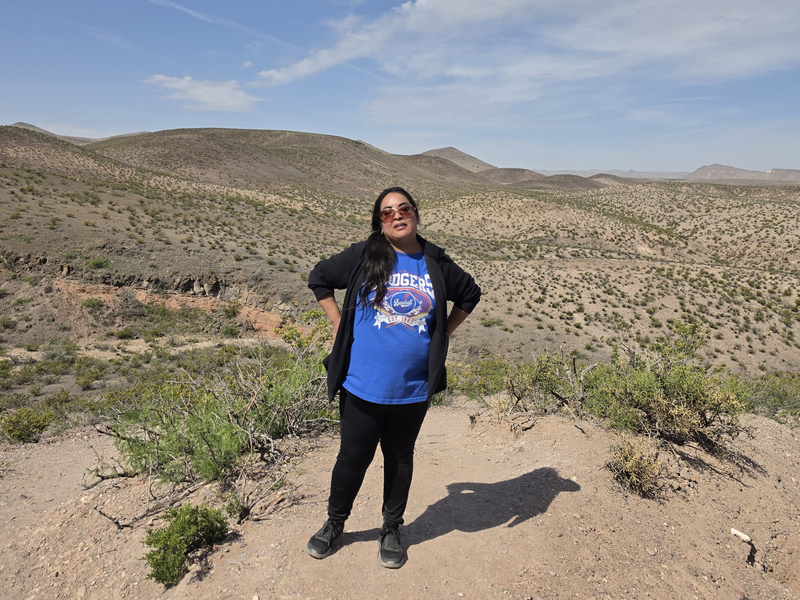
Daily maintenance and reminders that she received a second chance at life are always there. Laura takes immunosuppressive drugs and will continue to do so for the rest of her life to prevent her body from rejecting her donor lungs. Additionally, she meets with her care team every three months for regular check-ins.
“Laura’s journey reflects her remarkable strength, perseverance and the coordinated efforts of her care team in the face of a devastating lung disease and complicated post-transplant course,” said Chetan Naik, MD, medical director of lung transplantation at Baylor University Medical Center.
“Her story is also a testament to the advances in lung transplant surgical techniques and post-operative care, which have led to better survival rates and larger numbers of transplants.”
Looking for ways to give back
Grateful for the extraordinary gift she was given, Laura is continuously looking for ways to give back. She has served on the board of the United Network for Organ Sharing (UNOS), a non-profit scientific and educational organization that administers the only organ procurement and transplantation network in the United States.
She is also eager to raise awareness about the need for more people in the Latino community to become organ donors.
According to the U.S. Department of Health and Human Services Office of Minority Health, Hispanic/Latino Americans made up almost 24% of all candidates on the national organ transplant waiting list in 2025, yet accounted for only 15% of all organ donors. Cultural beliefs, language barriers and lack of awareness can all contribute to this gap, making advocates like Laura essential voices in the community.
“I want people to know that receiving a transplant is not the end of your story; it’s the beginning of a new one,” Laura said.
“And for those in the Latino community, I want them to understand that becoming an organ donor is one of the most profound gifts you can give. Someone gave me that gift, and because of it, I get to hug my daughter, walk outside in the sunshine, and breathe deeply every single morning. That’s everything.”
Organ donations save lives. If you’re interested in becoming an organ donor, register at a Texas Department of Public Safety location near you or visit Donate Life.
Learn more about our transplant services here.